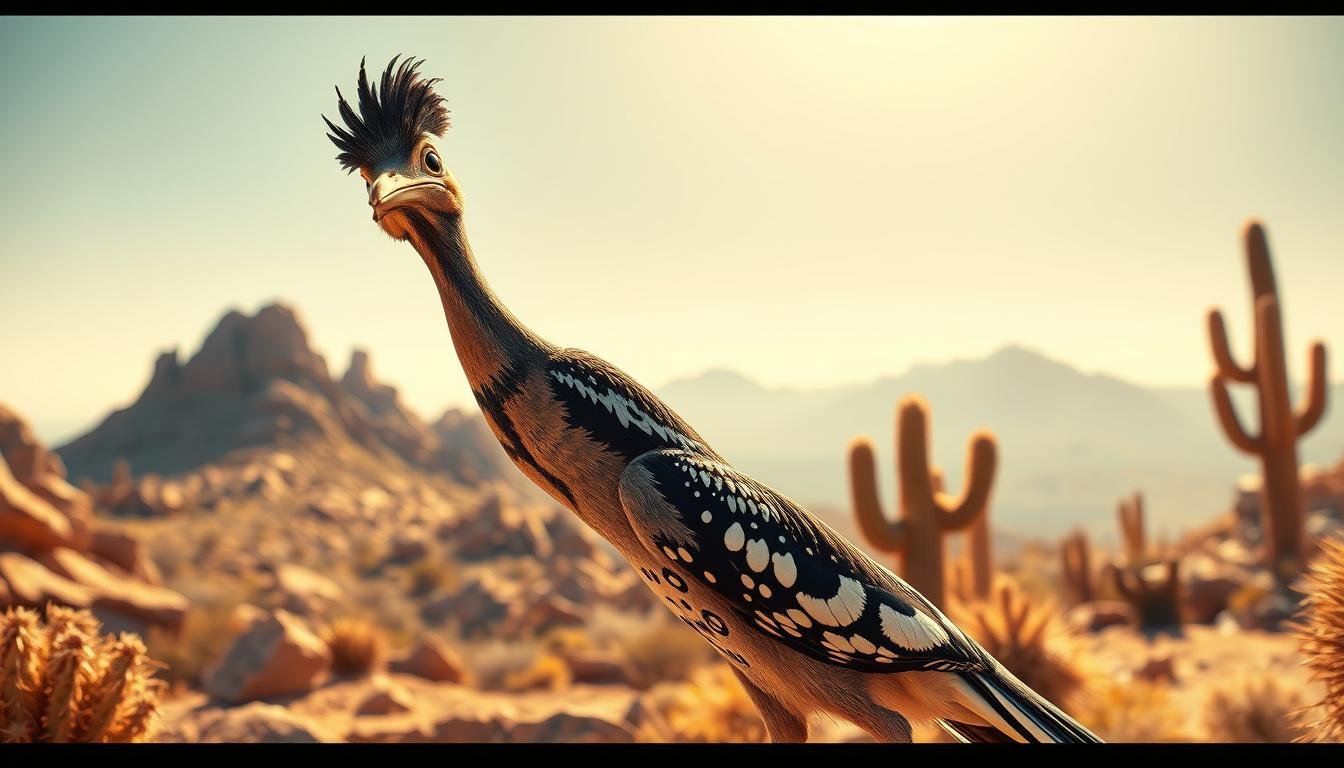
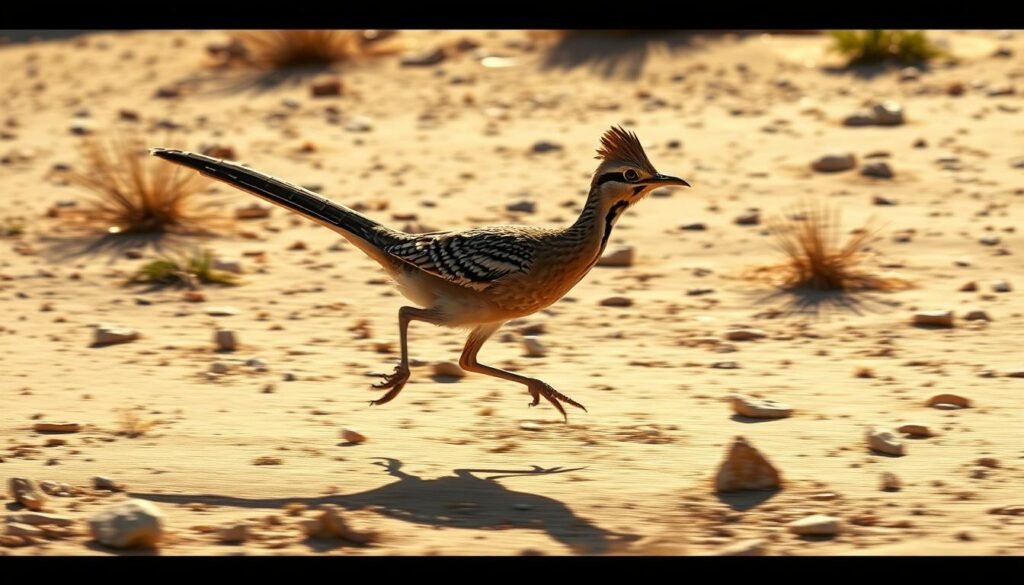
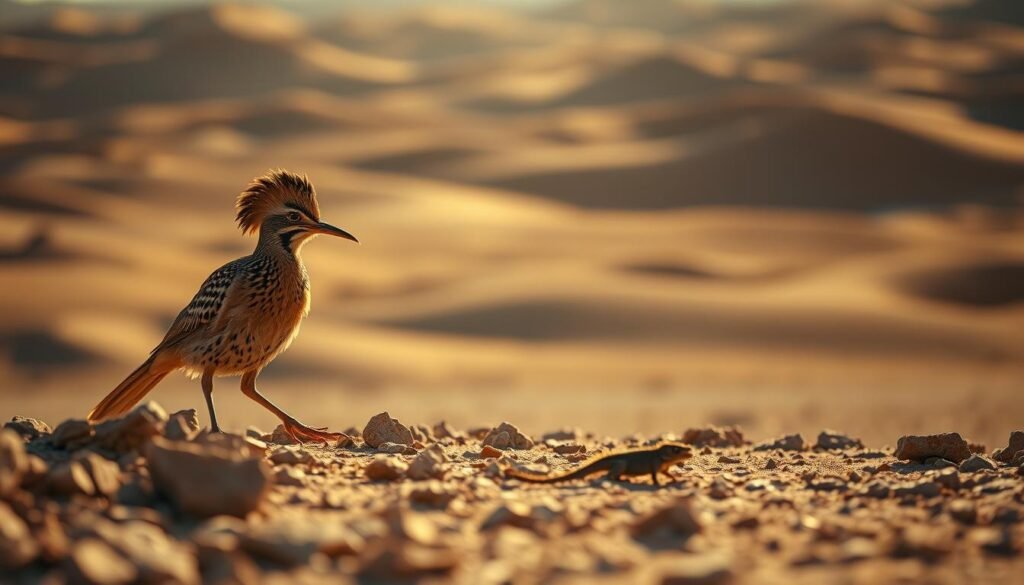
Forget cartoon coyotes – the actual desert speedster called Geococcyx californianus is way cooler than any Saturday morning version. These lean, mean survival machines clock 20 mph across the Southwest’s dusty racetracks, hunting lizards like they’re auditioning for nature’s ultimate game show. Let me tell you, these birds don’t need anvils or rocket power – their real-life tricks will blow your mind.
Picture this: a feathered ninja that head-bangs rattlesnakes to death and sunbathes at dawn to warm up for the day. That’s your chaparral cock! I’ve watched them in Arizona’s Sonoran Desert, and trust me, their breakfast menu (scorpions, tarantulas, even other birds) makes your cereal look real boring.
Here’s the kicker – roadrunners don’t actually go “beep beep”. Their real call? A creepy cooing sound straight out of a dinosaur movie. But who needs cartoon sound effects when you’ve got built-in Swiss Army knife skills? Stick around – we’re diving into how they pee through their eyeballs (yes, really) and why they’re basically the MacGyvers of the animal kingdom.
Unmasking This Fast-Running Bird
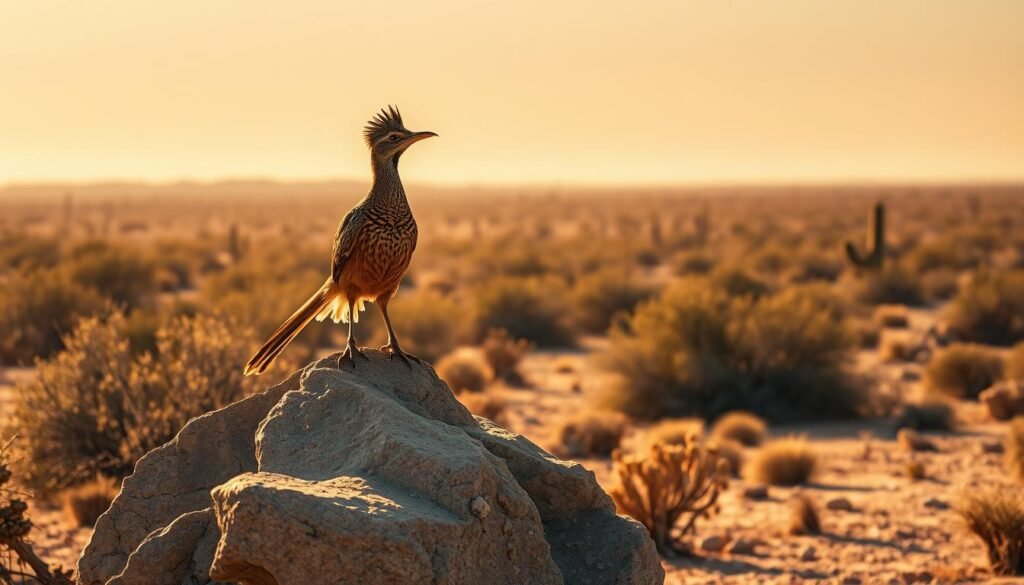
Let’s get one thing straight – roadrunners aren’t your typical flyers. These desert sprinters prefer pounding dirt over soaring skies, turning the ground into their personal treadmill. I’ve seen them zip past cacti faster than a kid on a sugar rush, their legs blurring like windshield wipers on hyperdrive.
Distinctive Running Abilities
Those 20 mph speeds? They’re not just showing off. Roadrunners have zygodactyl feet – two toes forward, two backward – that work like nature’s cleats. Picture a feathered drag racer leaving X-shaped tracks in the dust, each print screaming “I was here!” Their secret? Spring-loaded tendons that store energy like coiled rubber bands.
Grounded Lifestyle Insights
These birds practically invented the term “down to earth.” They’ll chase a lizard across a parking lot as casually as you’d jog to the fridge. Watch them hunt: head low, tail steering like a rudder, feet slapping the desert floor in rapid-fire beats. Even their nests sit just 3-10 feet up – high enough to spot snacks, low enough for quick getaways.
Feature
Roadrunner
Other Birds
Top Speed
20 mph
5-12 mph (avg. running)
Feet Structure
X-shaped tracks
Single-file prints
Hunting Style
Ground pursuit
Aerial dives/perching
Here’s the kicker – their ground game is so strong, they’ll literally run circles around rattlesnakes. No wings required when you’ve got legs that could outpace most middle schoolers. Next time you’re in the Southwest, check the dirt for those signature Xs. That’s nature’s autograph from the original speed demon.
Roadrunner Facts for Kids: Essential Insights
Scientists have a flair for dramatic names – Geococcyx californianus sounds like a spell from Harry Potter, but it’s actually your ticket to understanding these desert dynamos. Let’s crack open their biological passport and see what makes their family tree wilder than a tumbleweed in a tornado.
Scientific Name and Species Variations
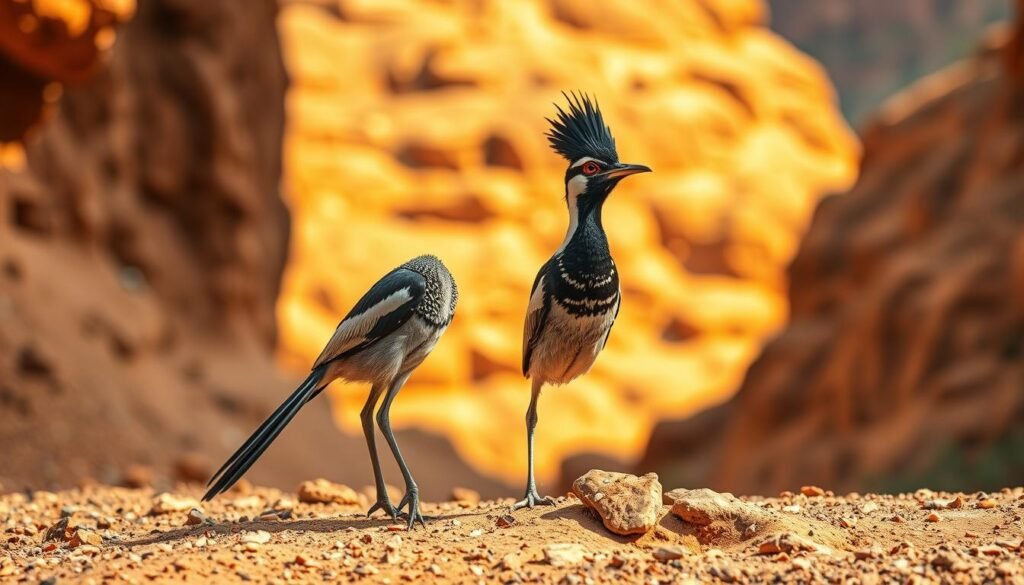
That mouthful of a name? Break it down: “Geo” means earth, “coccyx” refers to cuckoo relatives, and “californianus” hints at their Southwest stomping grounds. But here’s the twist – not all dirt-dashing birds are created equal. The greater roadrunner you know from Arizona postcards has a smaller, shyer cousin roaming Mexico’s scrublands.
Picture two siblings with different lifestyles. The lesser roadrunner weighs half as much – like trading an SUV for a compact car. Their territories barely overlap, which I learned the hard way trying to spot both during a Texas-Mexico road trip. Pro tip: Check the tail feathers. The greater’s got flashier white tips, like nature’s racing stripes.
Feature
Greater Roadrunner
Lesser Roadrunner
Size
23 inches
18 inches
Habitat
Southwest U.S.
Mexico/Central America
Speed
20 mph
15 mph
Why does this matter? These species adaptations show how evolution tailors animals to specific environments. The greater’s bulk helps tackle rattlesnakes, while the lesser’s compact build navigates dense thickets. It’s like watching two chefs use the same ingredients differently – both get the job done, just with unique flavor.
Habitats and Survival in Arid Regions
Sunrise in the Mojave reveals nature’s ultimate endurance athletes – roadrunners doing morning stretches on sun-warmed rocks. These desert dwellers treat scorching sands like a VIP lounge, thriving where most birds would pack up and migrate. From Arizona’s sizzling Sonoran flats to Mexico’s cactus jungles, they’ve cracked the code for surviving Earth’s most brutal sauna sessions.
Desert Living and Environmental Challenges
Watch a roadrunner in Death Valley, and you’ll see survival cheat codes in action. Their bodies recycle water from lizard blood and insect juices – basically running on desert margaritas. When temperatures hit triple digits, they flip into energy-saving mode: wings drooped like sunshades, panting like a dog at a BBQ.
Here’s their secret weapon – nasal salt glands that work like built-in Brita filters. Instead of peeing (which wastes water), they sneeze out salt crystals. I’ve found these tiny white cubes near their nests – nature’s version of table salt shakers.
Desert Challenge
Roadrunner Solution
Scorching heat
Sunbathe at dawn to store warmth
Water scarcity
Get moisture from prey’s bodily fluids
Predator threats
Nest in thorny cholla cacti
Conservation efforts matter here. While greater roadrunners aren’t endangered yet, their Central American cousins face habitat squeeze from expanding farms. Next time you’re hiking, listen for their dinosaur-like coos – it’s the sound of evolution high-fiving itself on a sunburnt treadmill.
Wild Diet and Prey Tactics
Watch a roadrunner at mealtime, and you’ll witness nature’s most chaotic buffet line. These feathery foodies flip between predator and scavenger faster than a TikTok chef – one minute snatching a dragonfly mid-air, the next gulping down prickly pear fruit. Their secret? Treating the desert like an all-you-can-eat diner where everything’s on the menu.
Omnivorous Eating Habits
I’ve seen their grocery list: beetles, centipedes, mice, even baby rattlesnakes. Roadrunners aren’t picky – they’ll chomp anything that fits in their beak. Morning might bring a grasshopper scramble, afternoon a sidewinder sushi roll. Their insect-heavy diet shifts with the seasons, switching to berries when creepy-crawlies play hide-and-seek.
Preying on Lizards and Spiders
Here’s their signature move: snatch a lizard, slam it against rocks like a chef tenderizing steak. I once spotted one whacking a tarantula repeatedly – nature’s version of “Is it dead yet?” This brutal shaking neutralizes venomous prey, turning dangerous meals into safe snacks. Their technique’s so effective, scorpion stings rarely faze them.
Surprise fact: These birds play food inspector. If a meal fights back, they’ll drop it and pounce again – testing edibility through combat. I’ve found half-eaten horned lizards near their nests, proof that even armored prey isn’t safe from their persistence.
Through binoculars in New Mexico, I watched a roadrunner outmaneuver a Gila monster for a spider prize. Their hunting style? Pure controlled chaos – darting, feinting, striking with precision. It’s not just eating; it’s the desert’s hungriest performance art.
Family Dynamics and Nesting Rituals
Imagine a desert power couple that splits chores better than most humans. These feathery partners don’t just wing it – their nest-building teamwork would put home renovation shows to shame. I’ve watched pairs in New Mexico’s scrublands, gathering materials with the focus of architects on deadline.
Shared Parenting and Egg Care
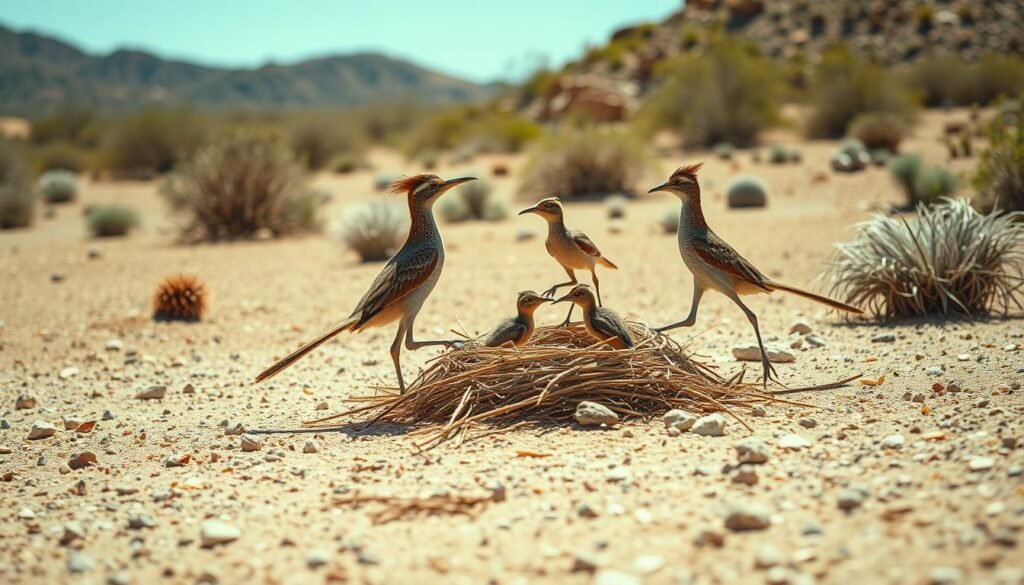
Their nursery starts with twigs and leaves, often lined with unexpected treasures like snake skin or cattle hair. I once found a nest near Tucson woven with blue ribbon – proof they’ll grab anything soft for their eggs. Both parents take turns incubating, but here’s the kicker: Dad pulls night shifts while Mom daylights. It’s like they’ve got a feathered baby monitor schedule.
Watch them switch shifts at dawn. The male struts in, does a little foot shuffle, and settles over the eggs as his partner bolts for breakfast. Their hatchlings get the VIP treatment – regurgitated insects served fresh every 20 minutes. I’ve clocked feedings: 8 AM caterpillars, 8:20 AM beetles, 8:40 AM lizard bits. Talk about a strict meal plan!
Twig delivery system: Male fetches, female arranges
Egg rotation duty: Both parents nudge eggs hourly
Security detail: Constant lookout for snakes and hawks
By week three, the chicks resemble muppets on caffeine – all legs and appetite. That’s when parenting gets real. Both adults teach hunting through live demonstrations, like feathered survival instructors. Last summer, I saw a juvenile face-plant chasing its first grasshopper. Mom just cocked her head like, “Try again, kiddo.”
This family operation shows nature’s genius. Equal shifts. Shared risks. And a nest that’s equal parts nursery and tactical command center. Next time you spot those X-shaped tracks, remember – there’s probably a feathered tag team nearby, rewriting the rules of desert parenting.
Survival Adaptations for Extreme Conditions
Ever wonder how these desert sprinters handle 120°F days and freezing nights? Their secret weapon isn’t speed – it’s a biological toolkit that would make MacGyver jealous. Let’s break down their two most brilliant survival hacks.
Torpor and Energy-Saving Modes
When temperatures plummet, these birds flip their internal switch to “desert eco-mode”. Like your phone dimming its screen to save battery, they lower their body temperature by 10°F at night. I’ve tracked their heart rates dropping to 50 beats per minute – slower than a sleeping human’s pulse.
This isn’t full hibernation. They stay alert to predators, conserving energy while maintaining survival awareness. Their long tail plays double duty here – acting as both rudder during sprints and insulation blanket during cold snaps.
Salt Excretion and Water Conservation
Forget water bottles – roadrunners hydrate through lizard blood and beetle juices. Their nasal glands filter salt like miniature dialysis machines. I’ve seen them sneeze out salt crystals that glitter like tiny diamonds in the morning sun.
Here’s the kicker: They recycle 98% of bodily fluids. While other cuckoo relatives need daily drinks, these desert pros can go weeks without water. Their tail feathers even help balance during high-speed chases, preventing energy-wasting tumbles.
Adaptation
Function
Benefit
Nighttime Torpor
Slows metabolism
Conserves 40% daily energy
Salt Glands
Filters minerals
Retains 3x more water
Tail Steering
Improves balance
Reduces hunting injuries
These tricks make them nearly invincible. While most cuckoo species flee harsh climates, our desert champion thrives through clever conservation. Next time you spot one, remember – you’re seeing evolution’s ultimate survivalist in action.
Parting Thoughts on This Feathered Wonder
There’s a reason biologists grin when talking about Geococcyx californianus. These birds break every rule – sprinting through scrublands like video game characters with cheat codes activated. I’ve seen their X-shaped feet carve tracks in New Mexico’s dust, each imprint whispering secrets of evolutionary hustle.
From nest raids in cholla cacti to salt-sneezing superpowers, roadrunners redefine desert survival. Their eggs hatch into mini ninjas that learn scorpion combat before mastering flight. The greater roadrunner’s bulk tackles rattlesnakes, while its lesser cousin dodges jungle thorns in Central America – same family, wildly different playbooks.
What keeps me hooked? Their unfinished story. Every morning, these animals reboot nature’s ultimate game – outsmarting heat, hunger, and predators with skills we’re still cataloging. You’ll find their drama written in dust: a feather here, a lizard tail there, a species that treats extremes like a daily commute.
So next time you spot those gangly legs blurring past, remember – you’re not just seeing a bird. You’re witnessing evolution’s greatest hits album, pressed onto clawed feet and fired through the desert at 20 mph. Who needs cartoons when reality’s this unhinged?