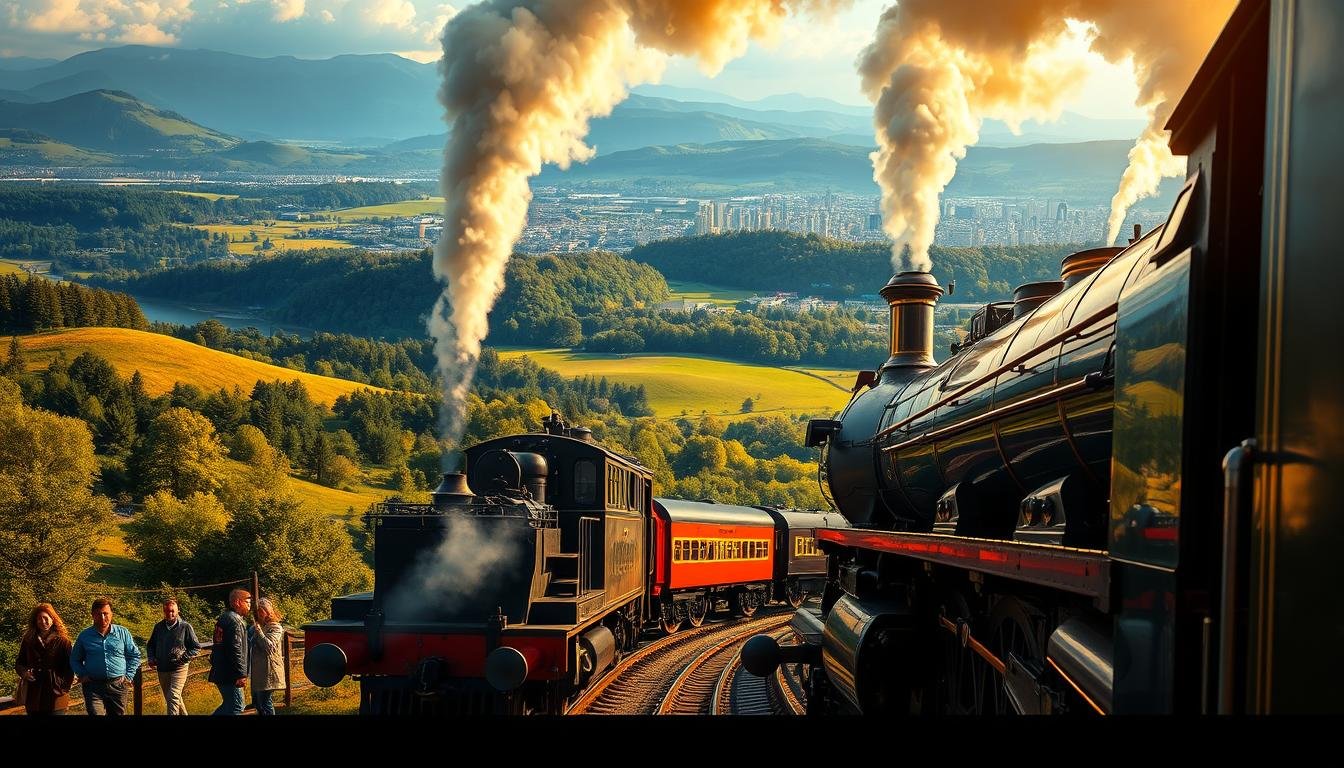
Imagine a world without highways, planes, or delivery trucks. That’s exactly where we’d be if trains hadn’t rolled into history, puffing steam and rewriting how we live. These iron giants didn’t just move coal and people—they dragged entire nations into the modern age, one rail tie at a time.
Let’s start with the really old stuff. Before engines roared, horses pulled carts on wooden tracks in 16th-century Germany. Picture a glorified roller coaster made of splinters—hardly the bullet trains of today. Then came 1804: a grumpy iron monster named Richard Trevithick’s steam locomotive chugged into Wales, hauling 10 tons of iron at a blistering 5 mph. Snails probably laughed.
By 1825, the Stockton & Darlington Railway flipped the script. Suddenly, factories could ship goods faster than a stagecoach robbery. Cities exploded like popcorn kernels. Want proof? The U.S. transcontinental railroad sliced coast-to-coast travel from six months to one week. Talk about a glow-up!
Modern rails are no less wild. Japan’s Shinkansen hits 200 mph—faster than a cheetah on espresso. Freight lines move everything from sneakers to snowplows, quietly keeping your Amazon addiction alive. And guess what? Those clunky 19th-century ideas still echo in subway systems and electric bullet trains today.
Ready to dive deeper? Let’s unpack how these clanging, smoke-belching beasts became the quiet heroes of your pizza delivery.
Understanding the Birth of Rail Networks
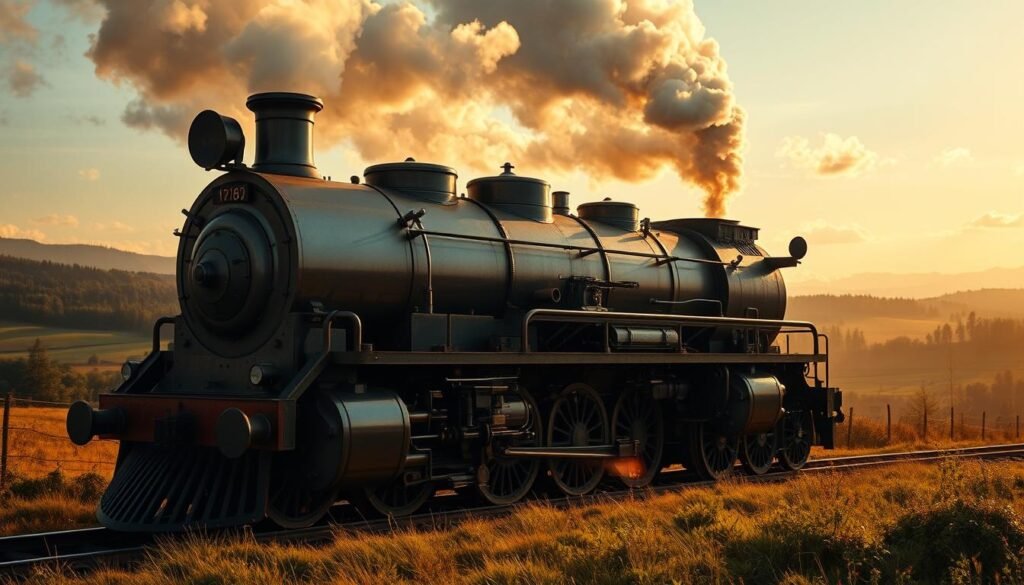
Picture this: sweating horses dragging creaky carts over splintered boards in 1500s Germany. That’s how rail transport began—not with roaring engines, but with wooden tracks that looked like oversized roller coasters. These rickety systems moved coal from mines, but they were about to get a fiery upgrade.
Richard Trevithick’s Steam-Powered First Run
Enter Richard Trevithick—a tinkerer who bet big on boiling water. In 1804, his steam locomotive hauled 10 tons of iron across Wales at 5 mph. Locals probably thought it breathed dragon fire! This clanking metal beast proved engines could replace horses, though it shook so violently that passenger cars remained a pipe dream.
Early Horse-Drawn Carriages on Wooden Tracks
Before Trevithick’s breakthrough, rail travel meant horsepower—literally. Wagons with flanged wheels gripped grooved timber tracks, preventing derailments on steep slopes. These “plateways” worked for mines, but iron rails soon replaced splintery wood. By 1825, Stockton & Darlington Railway mixed steam locomotives with horse-drawn passenger cars, creating the first true railroad recipe.
These early systems weren’t perfect—think breakdowns and bone-rattling rides. But they sparked a transportation revolution. Imagine engineers staring at those primitive cars, wondering…
Locomotives, Engine Tech, and the Mechanics Behind Trains
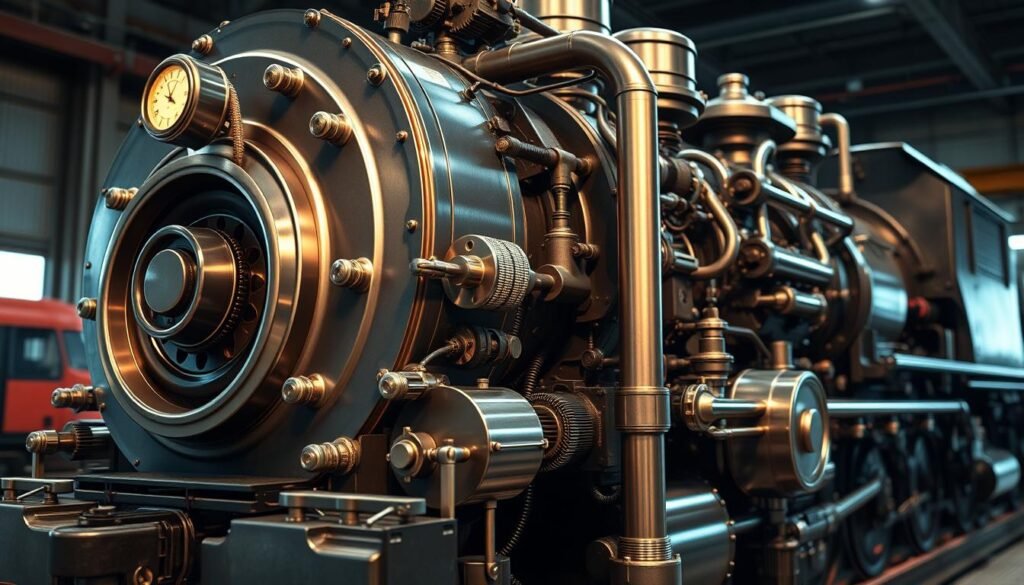
What if I told you modern diesel engines have a secret weapon smarter than your car’s cruise control? Let’s crack open the hood—metaphorically—and see how railroads keep these metal giants humming efficiently across thousands of miles.
Energy Management that Feels Like Cruise Control
Imagine driving up a hill while your car automatically adjusts throttle to save gas. Now scale that up to a 200-ton locomotive. Advanced energy management systems do exactly that—modulating speed based on track gradients and cargo weight. Climbing a steep slope? The system eases power to prevent fuel guzzling. Rolling downhill? It coasts like a bicycle, squeezing out 3-5% savings per trip. Multiply that across railroads, and you’re saving enough diesel annually to fill an Olympic pool. Twice.
Transitioning from Steam to Diesel and Electric
Steam engines were rock stars, but they burned fuel like pyromaniacs—only 20% efficiency. Enter diesel in the 1930s: quieter, cleaner, and 35% efficient. These beasts convert fuel to electricity, powering motors at each wheel. No more shoveling coal! Modern hybrids go further, pairing diesel engines with battery packs for stop-and-go routes. Electric lines? They’re the overachievers, drawing power from grids to hit 125 miles per hour without a drop of fuel.
Today’s locomotives are marathon runners—some clocking a million miles before retirement. That’s like circling Earth 40 times. Not bad for machines that once coughed coal dust, right?
Train Facts for Kids: Surprising Details That Change How You See Rails
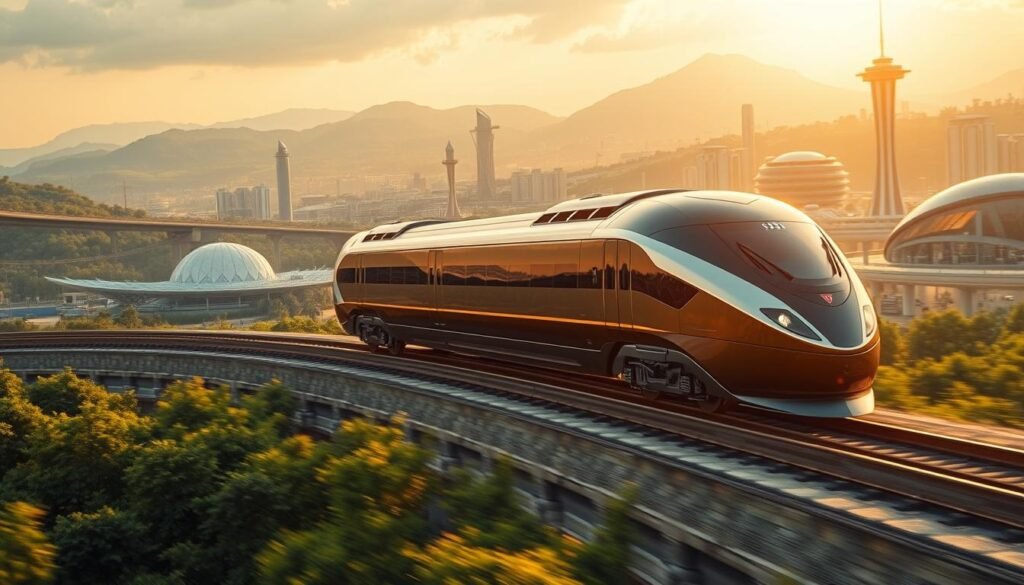
Ever wonder why modern passenger train seats feel like your favorite recliner? It’s not magic—it’s physics. Engineers now design cars to absorb vibrations better than smartphone shock absorbers. Take Japan’s E5 Shinkansen: its nose cone isn’t just sleek—it slices air resistance by 15%, letting you sip tea without spills at 200 mph.
Passenger Car Innovations and Real-Life Engineering
Today’s freight and people movers share DNA. Double-decker cars? Originally trains built for hauling cargo got stacked to save space. Now commuters enjoy rooftop views in Chicago’s Metra. Even dining cars got smart—Switzerland’s Glacier Express uses magnetic table stabilizers so your fondue stays upright on mountain curves.
Here’s what’s wild: your local subway borrows tricks from freight giants. Energy-recapture brakes—first used in heavy cargo trains—now power lights in NYC subway cars. And those quiet hybrid engines? They’re cousins to diesel-electric rigs that pull 10,000-ton coal loads.
- Amtrak’s newest cars use aircraft-grade aluminum—30% lighter, 20% more fuel-efficient
- European night trains feature modular cabins that convert from seats to bunk beds in 90 seconds
- China’s Fuxing Hao uses passenger train tech to maintain cabin pressure like airplanes at 220 mph
Next time you board, check the ceiling vents. Those aren’t just AC—they’re part of systems moving 3,000 cubic feet of air per minute. All while freight lines silently deliver your sneakers and smartphones. Makes you rethink that “choo-choo” sound, huh?
Global Rail Wonders and Extraordinary Journeys
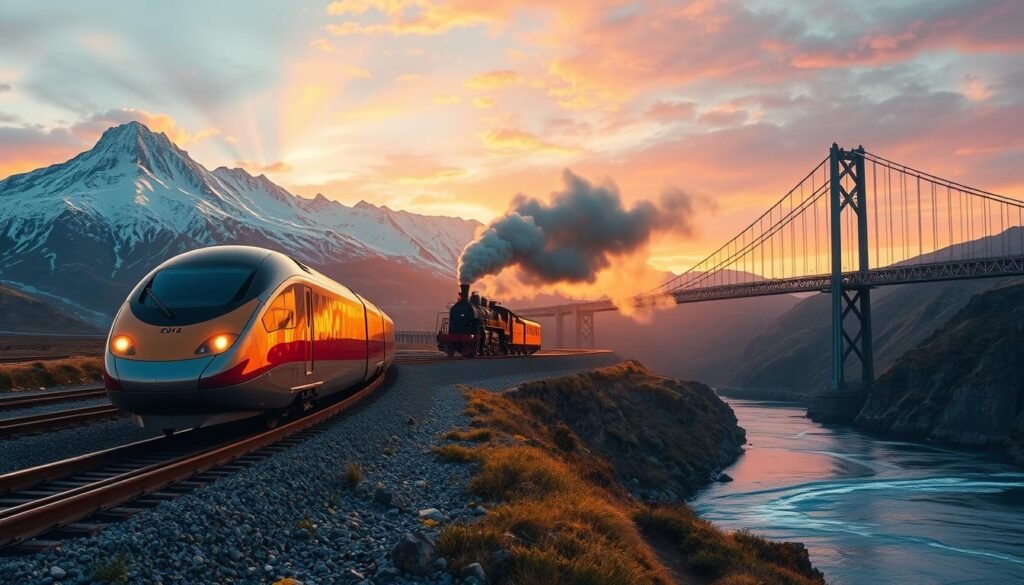
Hold onto your hats—railroads just got a passport stamp. From floating trains to bridges kissing the clouds, modern tracks rewrite physics while moving millions daily. Let’s tour three high-speed rail marvels that’ll make your commute feel like riding a tortoise.
Shanghai’s Maglev Speed and Swiss Cogwheel Adventures
Shanghai’s maglev isn’t just fast—it’s aviation on rails. This electromagnetic beast hits 267 miles per hour, outpacing takeoff speeds of most planes. Yet it halts at a train station straddling Pudong Airport, where commuters swap subway cards for boarding passes in 7 minutes flat.
Meanwhile, Switzerland’s Mount Pilatus railway laughs at gravity. Its cogwheel system climbs 48% gradients—steeper than a skateboard ramp. Passengers peer through tunnels carved into cliffs, watching valleys shrink to LEGO size. The ride’s so intense, they issue barf bags. (I’ve clocked it—zero spills, but my knuckles stayed white for hours.)
| Location | Feature | Stats | Wild Factor |
|---|---|---|---|
| Shanghai | Maglev Speed | 267 mph | Faster than Ferrari F1 pit stops |
| Swiss Alps | Cogwheel Gradient | 48% incline | Uses gears like a mountain bike |
| Indian Himalayas | Bridge Height | 1,178 ft | Taller than Eiffel Tower’s tip |
India’s Upcoming Bridge and Its Sky-High Ambition
India’s Chenab Bridge makes skyscrapers blush. When finished, this 1,178-foot colossus will dangle trains higher than Dubai’s Burj Khalifa. Engineers battle -20°C winds and 7.0 earthquakes—because why make things easy? Here’s the kicker: it’ll handle high-speed rail at 60 miles per hour while swaying 2 feet in storms. Try that on your local monorail.
Back in the United States, commuters grind through Penn Station at 15 miles per hour. But hey—at least our delays come with decent pizza. Whether you’re racing Shanghai’s maglev or white-knuckling Swiss cliffs, rails prove one thing: humanity’s obsession with going bigger, faster, and higher isn’t slowing down.
Behind the Scenes: Operations, Crew Duties, and Unique Rail Lingo
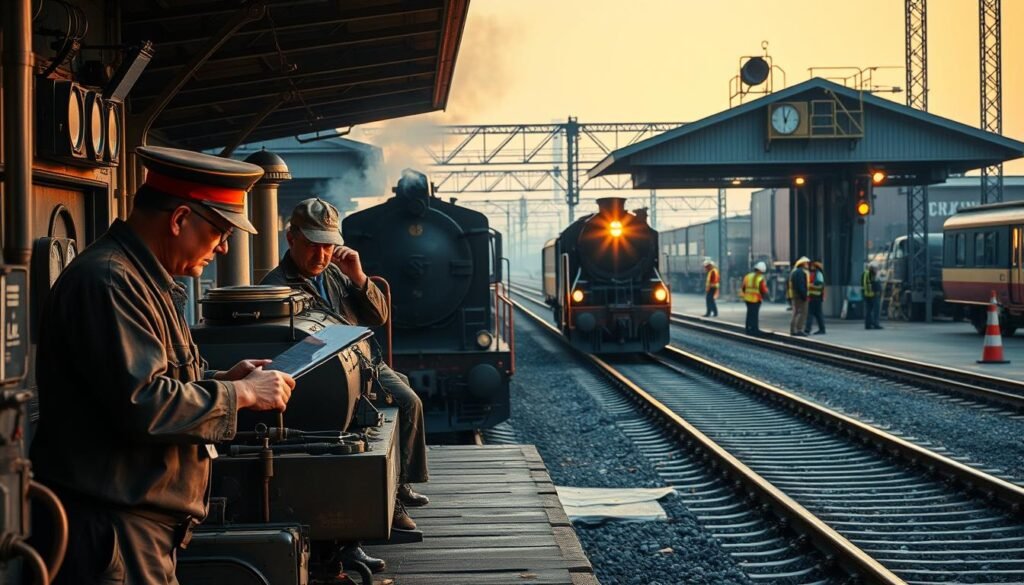
Let me pull back the curtain on rail operations—it’s like a backstage pass to Broadway, but with more grease and fewer jazz hands. From coded jargon to crew roles that’d make a SWAT team jealous, here’s how railroads really run.
Deciphering Terms Like Piggybacks and Demurrage
Rail lingo sounds like a spy’s grocery list. Piggybacks? That’s trucks riding flatcars like turtles hitching rides—saves highway traffic. Demurrage? Fancy talk for “you’re late unloading our boxcar—pay up.” Think parking tickets for freight. I’ve seen websites tracking these fees live—it’s reality TV for logistics nerds.
The Role of Conductors, Engineers, and Even Firemen
Conductors aren’t just ticket punchers. They’re mobile command centers—coordinating with dispatchers, solving delays, and memorizing types of cargo codes. Engineers? They drive the beast, but it’s not a joyride. One wrong move on icy rails, and you’re starring in a blooper reel.
Ever heard of firemen? Not the hose-wielding kind. On steam engines, they shoveled coal like gym rats on a treadmill. Modern versions monitor systems—still sweating, just less soot. Pro tip: Next time you’re in a dining car, thank the crew. Their break room’s a folding chair in Caboose #12.
Wrapping Up the Rail Maze With Insights That Keep the Wheels Turning
Let’s face it—those clunky steam locomotive pioneers from the 1800s would faint at today’s railways. We’ve gone from coal-stoked 5 mph crawlers to silent electric beasts hitting 267 miles per hour. Yet every maglev train and mountain cogwheel still owes its DNA to those early iron horses.
Here’s the kicker: railways still shape the way we move. Your sneakers? Probably rode a railway flatcar before hitting store shelves. That cross-country road trip? You’re tracing routes first scouted by 19th-century railway crews. Even industry lingo like “piggybacks” sneaks into trucking logistics.
Next time you’re stuck at a crossing, think bigger. Those tracks aren’t just metal—they’re living history. Who knows? Maybe your kids will ride vacuum tubes or solar-powered hover trains. Until then, flip through this page packed with wilder train facts kids actually care about. Trust me, Richard Trevithick’s ghost is taking notes.